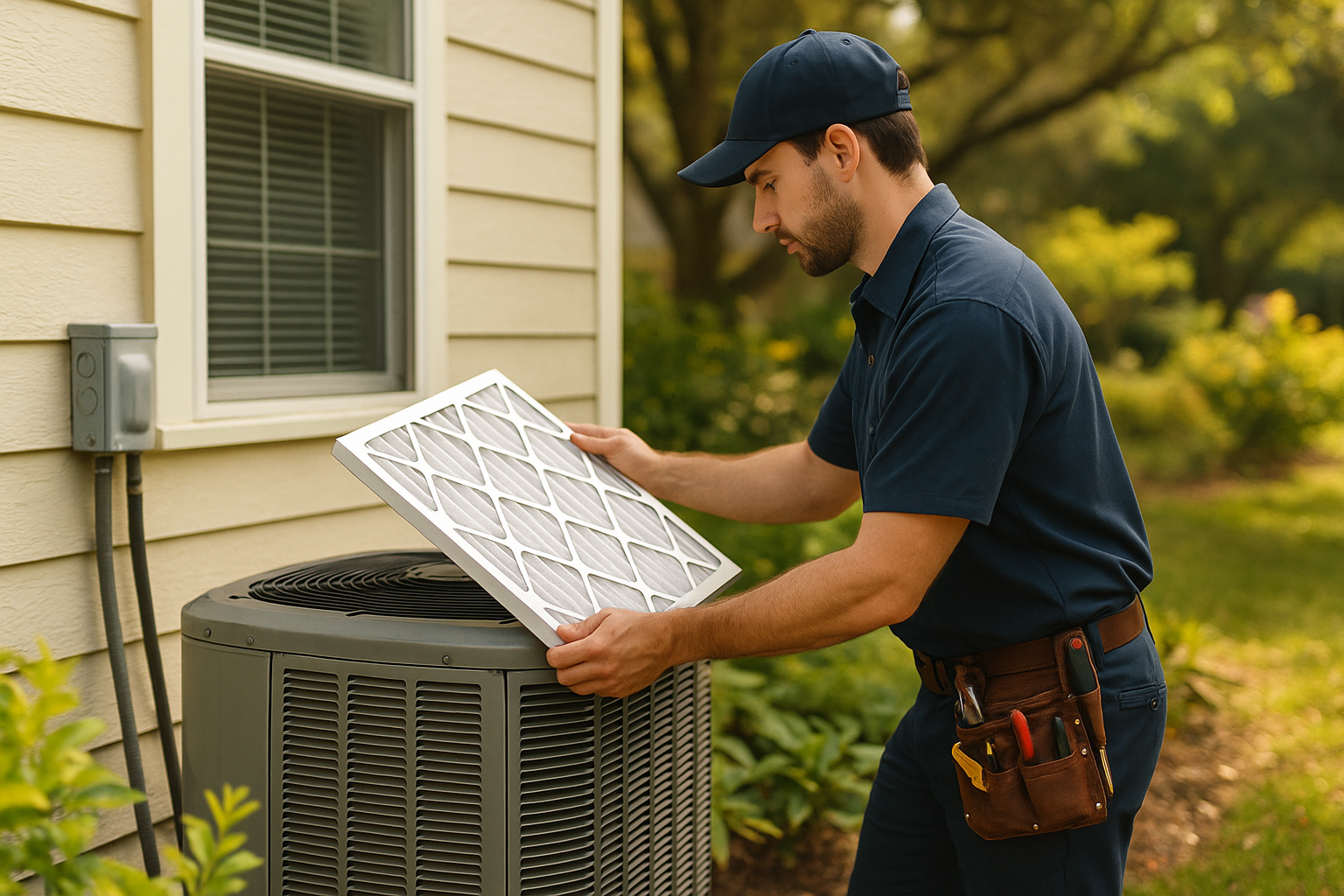
How Often Should I Change HVAC Filters During Charleston's Pollen Season
During Charleston's notorious pollen season, you should change your HVAC filters every 30-45 days instead of the standard 90-day interval. The city's high pollen counts from March through May can quickly clog filters, reducing air quality and forcing your system to work harder.
Why Charleston's Pollen Season Demands More Frequent Filter Changes
Charleston's subtropical climate creates perfect conditions for extended pollen seasons. The combination of mild winters and early spring warmth allows trees like oak, pine, and sweet gum to release massive amounts of pollen starting in March. This yellow dust doesn't just coat cars and outdoor furniture—it infiltrates your home's HVAC system at unprecedented levels.
Standard HVAC filters designed for normal conditions become overwhelmed during peak pollen months. A filter that might last three months in winter can become completely saturated in just four to six weeks during pollen season. This saturation doesn't just reduce air quality; it forces your system to work harder, increasing energy costs and potentially shortening equipment life.
Peak Pollen Months in Charleston
Understanding Charleston's pollen calendar helps you plan your hvac filter change frequency charleston pollen strategy:
- March: Tree pollen begins, particularly oak and pine
- April: Peak tree pollen season with highest counts
- May: Grass pollen joins tree pollen for double impact
- June-July: Grass pollen continues at moderate levels
Residents in areas like Mount Pleasant and West Ashley often report the heaviest pollen accumulation due to their tree-dense neighborhoods and proximity to marshlands that trap airborne particles.
Signs Your Filter Needs Immediate Replacement
Don't wait for your scheduled change date if you notice these warning signs during pollen season:
- Visible yellow or brown discoloration on the filter surface
- Reduced airflow from vents throughout your home
- Increased allergy symptoms among family members
- Higher than normal energy bills
- More dust accumulation on furniture and surfaces
A clogged filter during Charleston's pollen season can reduce your system's efficiency by up to 15%, translating to significantly higher cooling costs as temperatures climb toward summer.
Filter Types for Pollen Season
Not all filters handle Charleston's pollen challenge equally. During peak season, consider upgrading to:
- MERV 8-11 filters: Capture most pollen particles while maintaining good airflow
- Pleated filters: Offer more surface area for particle capture
- Electrostatic filters: Use static charge to attract pollen particles
Avoid going higher than MERV 13 unless your system is designed for it, as overly restrictive filters can damage equipment.
Cost Considerations and Planning
Increasing your hvac filter change frequency charleston pollen season will raise your annual filter costs, but the investment pays dividends. Budget approximately $60-120 annually for quality filters if changing every 30-45 days during pollen season and every 60-90 days otherwise.
This increased cost is minimal compared to potential repair bills from an overworked system or the discomfort of poor indoor air quality during Charleston's already challenging humidity levels.
Professional HVAC Maintenance During Pollen Season
While homeowners can handle filter changes, pollen season is an excellent time to schedule professional HVAC maintenance. Technicians can clean coils, check ductwork for leaks, and ensure your system operates efficiently despite the additional particle load.
Many Charleston HVAC professionals recommend scheduling maintenance in early March, just before peak pollen season begins. This timing ensures your system is optimized to handle the increased filtration demands ahead.
Remember, maintaining proper hvac filter change frequency charleston pollen practices protects both your family's health and your HVAC investment during one of the most challenging times of year for indoor air quality.
Frequently Asked Questions
- Can I use the same filter type year-round in Charleston?
- While possible, upgrading to MERV 8-11 pleated filters during pollen season provides better particle capture than basic fiberglass filters used in winter months.
- How do I know if my filter is completely clogged?
- Hold the filter up to light—if little to no light passes through, it's completely saturated and needs immediate replacement regardless of timing.
- Should I change filters more often if I have pets?
- Yes, pet hair and dander combined with pollen creates extra filtration load. Consider changing every 3-4 weeks during peak pollen season.
- Do expensive filters last longer during pollen season?
- Higher-quality filters capture more particles but may clog faster during heavy pollen. Focus on appropriate MERV rating rather than just price.
- Can dirty filters damage my HVAC system?
- Absolutely. Clogged filters restrict airflow, causing the system to work harder, potentially leading to frozen coils, motor damage, and premature failure.
About the author: Matt Fowkes, Founder. Matt Fowkes founded the operator to connect homeowners with vetted local service professionals. He's spent over a decade studying how online directories and matching services work — what makes them trustworthy, what makes them fast, and why most fail homeowners.
More hvac guides for Charleston
Need hvac help in Charleston?
Get matched with a vetted local pro — free, no obligation.